


Manchester United are preparing to enter what could become the most important transfer window in their recent history.
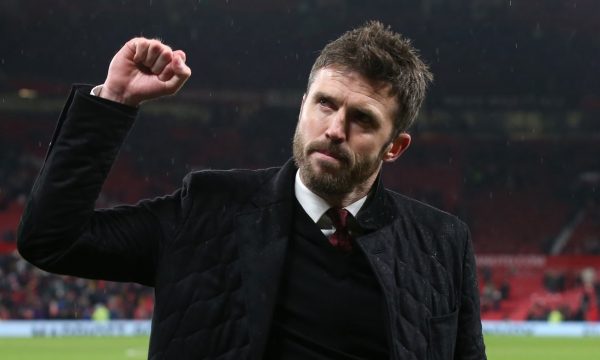
Thanks in part to interim manager Michael Carrick, who has transformed the club’s fortunes since replacing Ruben Amorim in January, United will compete in the UEFA Champions League next season.
This summer will be crucial for those working behind the scenes at Old Trafford.
The expected departure of Casemiro will leave a major gap in midfield, while the future of Manuel Ugarte remains uncertain after a difficult season.
What is clear is that United are working intensively to build a shortlist of midfielders ahead of the demanding 2026–27 campaign.
Aurélien Tchouaméni, Mateus Fernandes, Hayden Hackney, Alex Scott, Elliot Anderson, Adam Wharton and Carlos Baleba have all been mentioned as possible targets, alongside Ederson and Sandro Tonali.
But the big question remains — how much money do they actually have to spend this summer?
Football finance expert Rob Wilson, Professor of Applied Sports Finance and Head of Executive Education at UCFB, explained that qualification for the Champions League could significantly strengthen the club’s transfer strategy under Michael Carrick.
However, Wilson emphasized that participation in Europe’s biggest competition is only one part of the equation when it comes to how much can be spent on improving the squad.
According to Wilson, United could spend between £250 million and £300 million this summer, but that figure does not depend solely on Champions League qualification.
“It would be too simplistic to think that returning to the Champions League automatically gives United a straightforward transfer budget, because there are many more nuances involved,” he said.
He added that profitability and sustainability rules, along with efforts to reduce the wage bill, are key factors.
In general terms, Champions League football can generate around £80–120 million more compared to missing out on Europe altogether, in addition to extra revenue from matchdays, sponsorships, and commercial rights.
However, that does not mean the entire amount can be spent directly on transfers, though it does increase the club’s financial flexibility.
If looking purely at gross spending, United could have around £150 million available without including player sales, which would be enough for five or six quality signings.
Player departures and wage reductions — involving names such as Casemiro, Jadon Sancho and potentially Marcus Rashford — could increase that budget even further.
Wilson stressed that if United successfully clear parts of their wage structure, the club could become far more financially disciplined and aim to keep salaries for new signings below £200,000 per week.
Overall, spending could reach £250–300 million, with a net spend of around £100 million depending on outgoing transfers.
He also added that consistent qualification for the Champions League is the key to the huge financial growth enjoyed by elite clubs, bringing long-term stability and the ability to invest heavily every summer.
If United fail to qualify again in the future, financial limits would immediately tighten and major plans would become far more restricted.

