



Her father refused to marry her mother and walked away. She grew up sharing a bedroom with eight other people in one of Italy’s poorest cities.
During World War II, she was injured by shrapnel from an artillery shell.
Food was so scarce that she later described herself as being “as thin as a stick.” A photographer noticed her when she was 15. At the age of 27, she won an Oscar.
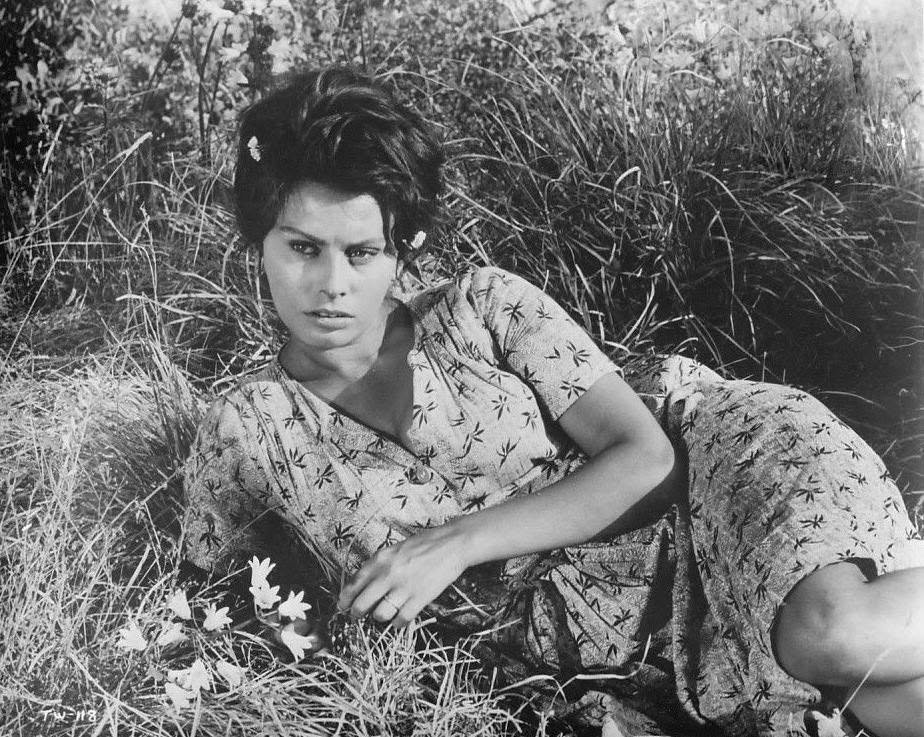
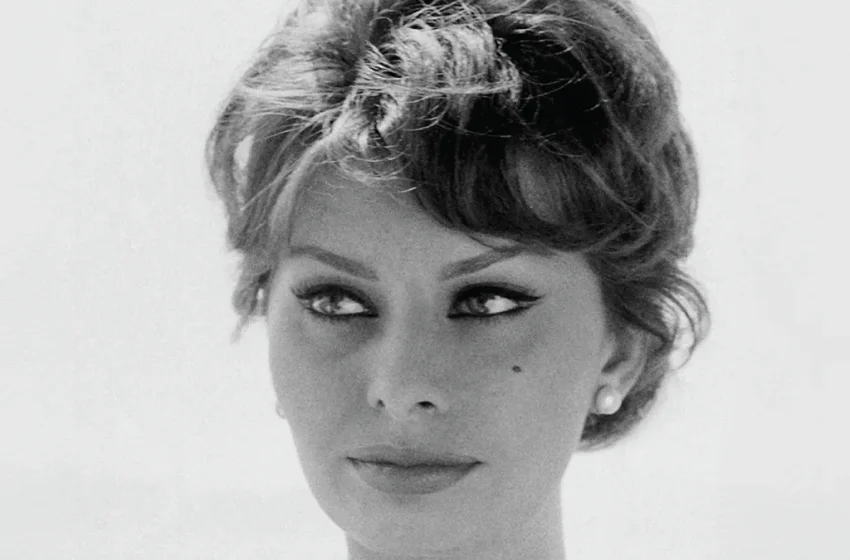
This is Sophia Loren in Cannes.
She is 20 years old and has only just begun her journey.
Her real name is Sofia Villani Scicolone. She was born on September 20, 1934, in a charity ward in Rome. She was born out of wedlock because her father, Riccardo Scicolone, refused to marry her mother, Romilda Villani, even though they had two children together.
Her mother took her to Pozzuoli, a port city on the Bay of Naples, which one travel writer described as “perhaps the most miserable city in Italy.” The family settled in her grandparents’ home. Sofia shared a bedroom with eight other people.
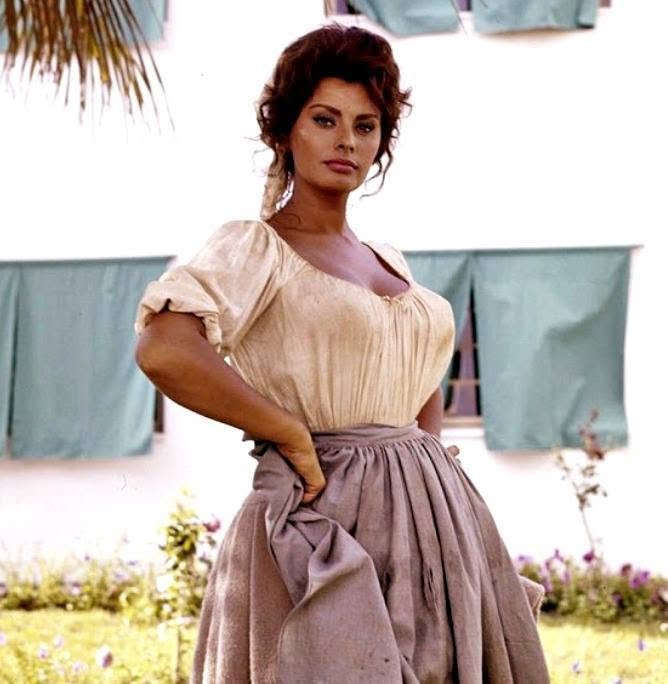
She grew up surrounded by hunger.
Air raids repeatedly forced the family into shelters. Food was so scarce that years later she would describe herself as a frail, malnourished child—“as thin as a stick”—a picture completely opposite to the woman the world would later come to know.
She is nine years old when a piece of shrapnel strikes her during a bombing raid near Pozzuoli. The family flees to Naples. The war follows them there.
To survive, her grandmother opens a small restaurant. Her mother plays the piano. Young Sofia serves the customers.
She is only 11 years old, waiting tables in the middle of a war zone to help her family survive.
The war ends. Italy is devastated. Naples lies in ruins. The Scicolone family has almost nothing.
And yet her mother, Romilda, who had once dreamed of becoming an actress herself and who closely resembled Greta Garbo, refuses to allow her daughters to give up on their dreams.
She teaches Sofia how to carry herself. How to walk into a room and make her presence felt.
Sofia is 15 when she and her mother save enough money to travel to Rome for the Miss Italy beauty contest.
She does not win. She finishes second in the regional competition.
But something happens during that contest that changes everything.
A film producer, Carlo Ponti, is in the audience. He is 37 years old. He sees something in the 15-year-old girl from Pozzuoli that he believes no camera has yet fully captured—a combination of vulnerability and strength, hunger and warmth.
He becomes her mentor. Later, he also becomes her husband.
Under his guidance, the girl who had grown up sharing a room with eight people begins to transform. She takes acting lessons. She poses for fotoromanzi, Italian magazines that told stories through photographs.

She changes her name. First to Sofia Lazzaro, a reference to Lazarus, who rose from the dead. Later, for her first major leading role, she becomes Sophia Loren.
Her first film appearance is as an extra in Quo Vadis, an American production filmed in Rome. She is one of dozens of slaves in the background. She has no lines.
Nobody notices her.
But she notices everything.
She takes the leading role in Aida, an adaptation of Verdi’s opera, lip-syncing to the voice of the famous soprano Renata Tebaldi.
For the first time, critics take notice.
Something was happening that could neither be manufactured nor taught: she would appear on screen, and the screen would change.
Director Vittorio De Sica, one of the founding masters of Italian Neorealist cinema, casts her in The Gold of Naples.
She is 19 years old.
The film becomes her great breakthrough. De Sica sees in her what Ponti had also seen: a person who does not simply act out emotion, but contains it within herself.
They would make six films together.
The last one would bring her an Oscar.
Look at that photograph.
Cannes Film Festival, 1955.
She is 20 years old. She is wearing a dress that costs more than her grandmother’s entire house had once been worth.
She had been hungry. She had survived bombings. She had waited tables. She had shared a room and a bed with others. She had traveled across Italy chasing a dream that even her own father had never believed she deserved.
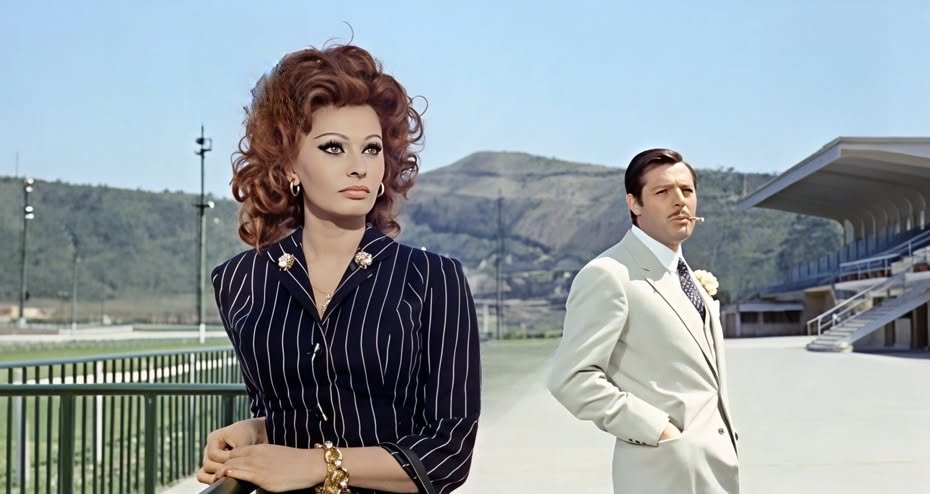
And now she stands in the south of France, photographed by every major camera in Europe.
But here is what most people do not know:
She had not yet become the most famous version of herself.
The Oscar was still six years away.
Hollywood comes calling. She appears in The Pride and the Passion alongside Cary Grant and Frank Sinatra.
Cary Grant falls so deeply in love with her during filming that he proposes marriage.
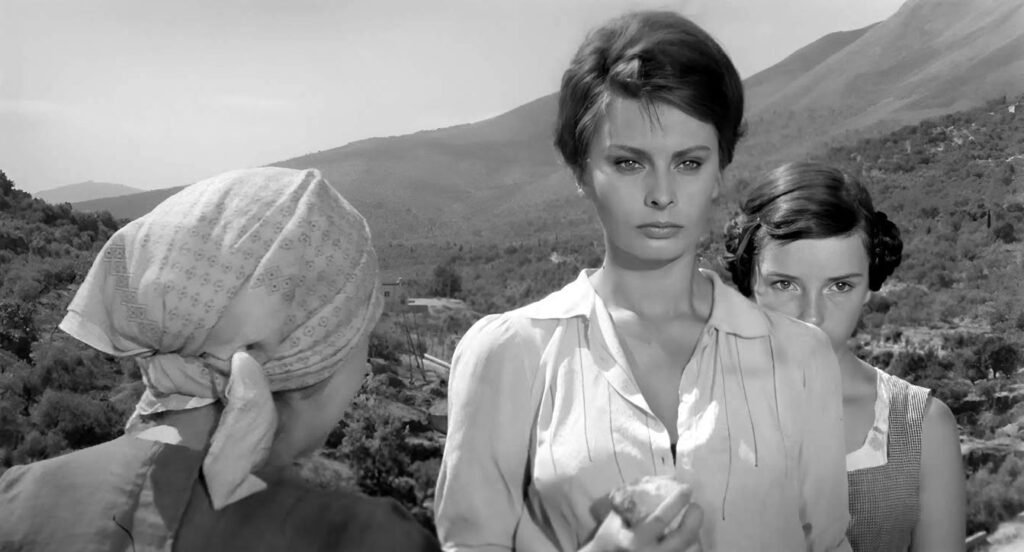
She turns him down.
In 1958, she signs a five-film contract with Paramount Pictures, one of the most coveted deals in Hollywood.
She stars alongside Clark Gable. William Holden. Peter Sellers. Paul Newman. Charlton Heston.
The biggest male stars in the world stand opposite her—and she holds her own against every one of them.
1961.
The Academy Award for Best Actress goes to Sophia Loren for Two Women.
She plays a mother desperately trying to protect her teenage daughter from the violence of World War II in the Italian countryside.
Her performance is powerful, physical, and devastating.
She wins 22 international awards for the role.
Sophia Loren becomes the first actress in history to win an Oscar for a performance in a foreign-language film.
The girl who once shared a room with eight people in Pozzuoli now stands in Hollywood holding the most famous prize in cinema.
During her career, she makes more than 80 films.
In 1991, she receives an honorary Oscar for her lifetime achievements.
In 1995, she receives the Golden Globe Cecil B. DeMille Award.
She becomes one of the most important figures in six decades of Italian and American cinema, spanning drama, comedy, and musical films.

Today, she is 90 years old.
And she remains one of the most photographed women in the history of the world.
She once said:
“The two big advantages I had at birth were to have been born wise and to have been born in poverty.”
And she meant it.
Because sometimes the place you come from is not your limitation.
It is your fuel.
And some people burn so brightly that they illuminate every room they enter.

