


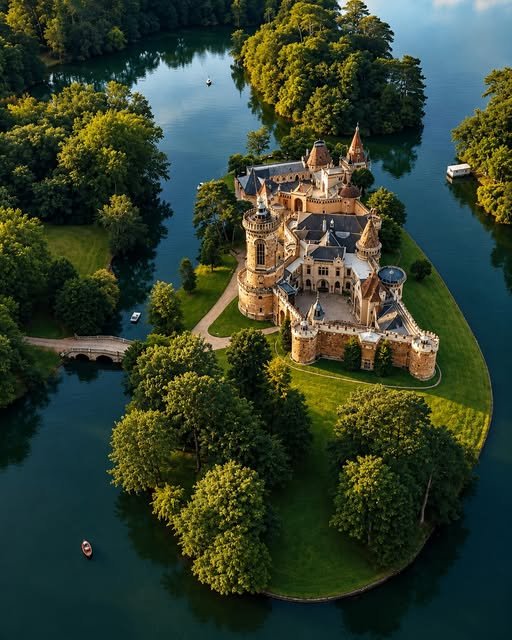
Just a short journey from Vienna, in the picturesque town of Laxenburg in Lower Austria, stands one of the country’s most enchanting historic landmarks: Franzensburg Castle. Surrounded by tranquil waters, romantic gardens and magnificent landscapes, this extraordinary castle looks like something from a medieval fairytale.
Often called “Austria’s Little Treasure House,” Franzensburg is the spectacular centerpiece of Laxenburg Palace Park, one of Austria’s most important historic landscape gardens.
A Castle Inspired by the Middle Ages
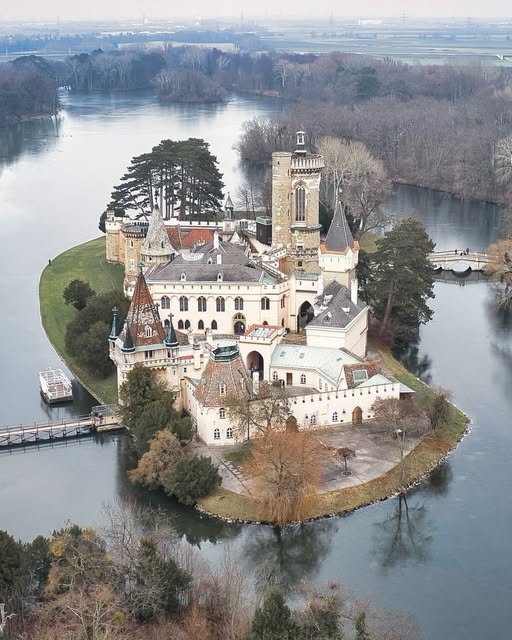
Although Franzensburg looks like an authentic medieval fortress, it was actually built from 1798 onward under Emperor Franz II/I as an idealized “old German-style” castle. It was conceived from the beginning as both a museum and a place of representation, creating a romantic vision of the medieval past.
The castle contains an impressive collection of historic works of art and architectural elements brought together from castles, monasteries and other historic buildings across Austria. Its richly decorated interiors feature magnificent coffered ceilings, stained-glass windows, marble floors and historic furnishings.
A Romantic Island Castle
One of Franzensburg’s greatest attractions is its setting. The castle stands amid the beautiful pond landscape of Laxenburg Palace Park, surrounded by water, trees and peaceful walking paths.
The palace park covers approximately 280 hectares, making it Austria’s largest historic landscape garden. Visitors can explore romantic paths, bridges, monuments, garden structures and the large castle pond while enjoying the peaceful atmosphere of the countryside.
During the season, visitors can also reach Franzensburg by ferry, adding a charming touch to the journey. Walking from the main park entrance takes around half an hour, while the scenic train provides another option for exploring the grounds.
Step Into Imperial History
Franzensburg is closely connected with the history of the Habsburg dynasty. Laxenburg served as an important imperial retreat for centuries, and members of the imperial family regularly visited the estate.
Emperor Franz Joseph and Empress Elisabeth—better known as Sisi—spent their honeymoon in Laxenburg. The town was also the birthplace of Crown Prince Rudolf, adding another fascinating chapter to its imperial history.
Today, visitors can discover this history through guided tours of the castle’s magnificent state rooms.
Explore the Castle’s Magnificent Interiors
A guided museum tour takes visitors through 18 historic rooms, including richly decorated halls and atmospheric spaces that bring the romantic world of Franzensburg to life.
For those looking for an even more spectacular experience, the Tower and Roof Tour provides access to the castle’s high tower and rooftops. From the top, visitors can enjoy panoramic views across the surrounding landscape, including distant mountain ranges and the Vienna region.
Because of safety requirements, Franzensburg can only be visited as part of a guided tour. In 2026, the museum season runs from March 28 to November 1.
More Than a Castle
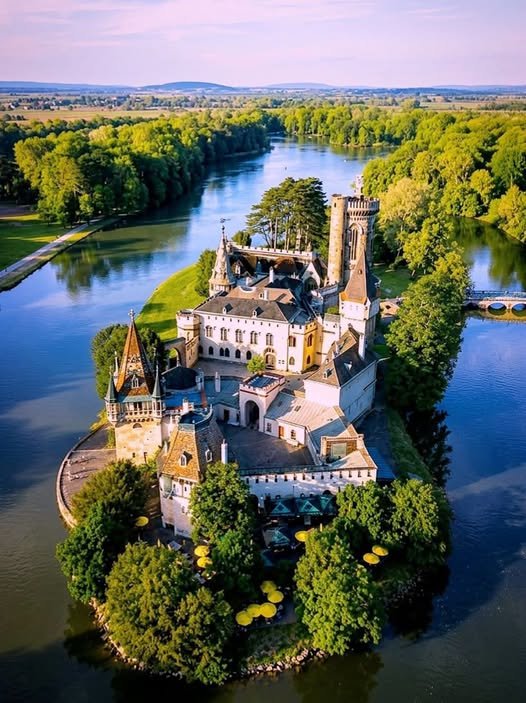
A visit to Franzensburg can easily become a full-day experience. The surrounding Laxenburg Palace Park offers peaceful walks, boat trips, scenic train rides and beautiful places to relax.
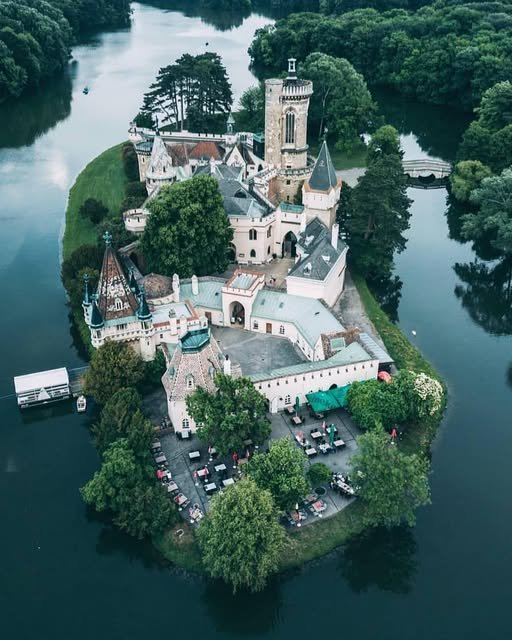
Visitors can also enjoy refreshments at Café Meierei, located beside the water near the castle, making it an ideal place to pause and admire the scenery.
A Perfect Day Trip from Vienna
Thanks to its proximity to Vienna, Franzensburg is an excellent destination for travelers who want to escape the busy city and experience Austrian history and nature in a peaceful setting.
Whether you are interested in imperial history, romantic architecture, photography, gardens or simply a relaxing day surrounded by beautiful scenery, Franzensburg offers something special.
Franzensburg Castle is more than a historic building—it is a fairytale experience where Austrian imperial history, romantic architecture and spectacular nature come together. A visit to this extraordinary castle is a wonderful way to discover one of Lower Austria’s most captivating treasures.

