


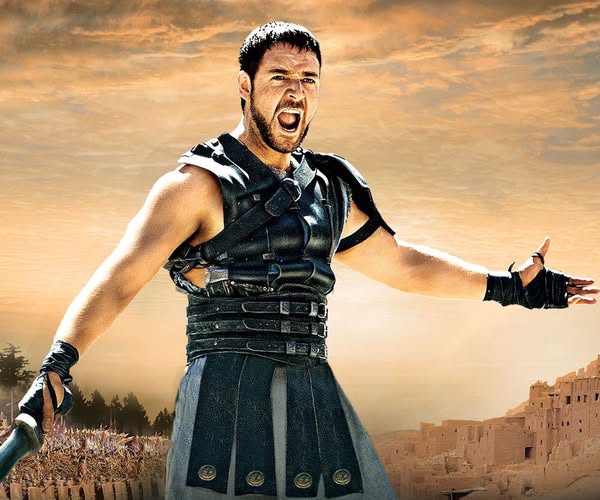
When I signed the contract to make Gladiator, I still remember the looks of disbelief that surrounded me. It felt like I had just signed the death sentence of my career.
Someone, with a half-smile, told me:
“You did well to act in L.A. Confidential… at least people will remember you for that before this film destroys you.”
I tried to explain that it was a project directed by Ridley Scott, one of the greatest masters of cinema. But I didn’t convince them.
“Sword-and-sandal films? Ancient Rome? No one wants to watch that anymore. They’re gone, like the Empire itself,” they told me.
“You’ve gotten yourself into trouble, Russell.”
To be honest, even I wasn’t completely sure.
“At the beginning, we didn’t even have a finished script. Just 21 pages, and not very convincing. But it was a Ridley Scott film, and I wanted to work with him.”
I knew the risk was huge.
“Many friends told me this was madness. No one wanted to see movies with tunics and sandals anymore. They asked me why I wanted to destroy my career that way.”
But deep inside, I felt the story had a soul. It was a tale of honor, revenge, and redemption.
“I trusted my instincts. I felt the story had something special, something timeless. I fought every day on set to make it real.”
And then, the miracle: Gladiator, released in 2000, captivated audiences and critics alike.
Five Academy Awards, including Best Picture and Best Actor.
“Gladiator changed everything. It changed my career, it changed cinema. Even today, I hear people calling me ‘Maximus!’ in the street.”
Sometimes you have to believe in your own madness. Because that’s where legends are born…

